
When I started singing in bars at 16 years old, I was obsessed with bands like Bon Jovi, Mötley Crüe, and Guns N’ Roses. The problem was that I didn’t have the voice to sing those songs consistently.
Every Friday night, I would go out and give it everything I had. I would push, strain, and force those high notes with pure determination. By the time I woke up Saturday morning, my throat would be sore and my voice would be hanging on by a thread.
Then Saturday night would roll around. I’d start the gig singing in a light falsetto because my voice wasn’t ready for battle yet. Eventually it would warm up and I’d work my way back into full voice. Looking back, I probably sounded like two completely different singers depending on which night you saw me perform.
Not long after that, I started taking voice lessons. My vocal coach told me I was a bass and that I would never sing higher than an E4 unless I used my “head voice.” The funny thing is that when she used the term head voice, she wasn’t talking about a vocal register. She was talking about a lighter tone quality that was almost falsetto-like.
If you’ve read my book Raise Your Voice, you know that I view chest voice and head voice differently. To me, chest voice is simply the area below your vocal break, and head voice is the area above it. The break itself is nothing more than a gear change that you learn to smooth out over time.
Back then, however, the common belief was simple: your range was set at birth and there wasn’t much you could do about it. Thankfully, someone challenged that idea..
One night after a concert, I was talking with the singer from one of the opening bands. During our conversation, he said something that completely changed the way I thought about singing.
“The voice is a muscle. You have to work it to build it.”
That statement hit me like a lightning bolt. From that moment forward, I became obsessed with finding out how far the human voice could be developed. If athletes could build stronger bodies, why couldn’t singers build stronger voices? That question sent me on a journey that would ultimately shape my entire career.
One of my first stops was studying the work of Jim Gillette and his Vocal Power program. Jim was one of the first vocal coaches who openly demonstrated that singers could dramatically expand their range. Another influence was Thomas Appell, who taught many of the same principles.
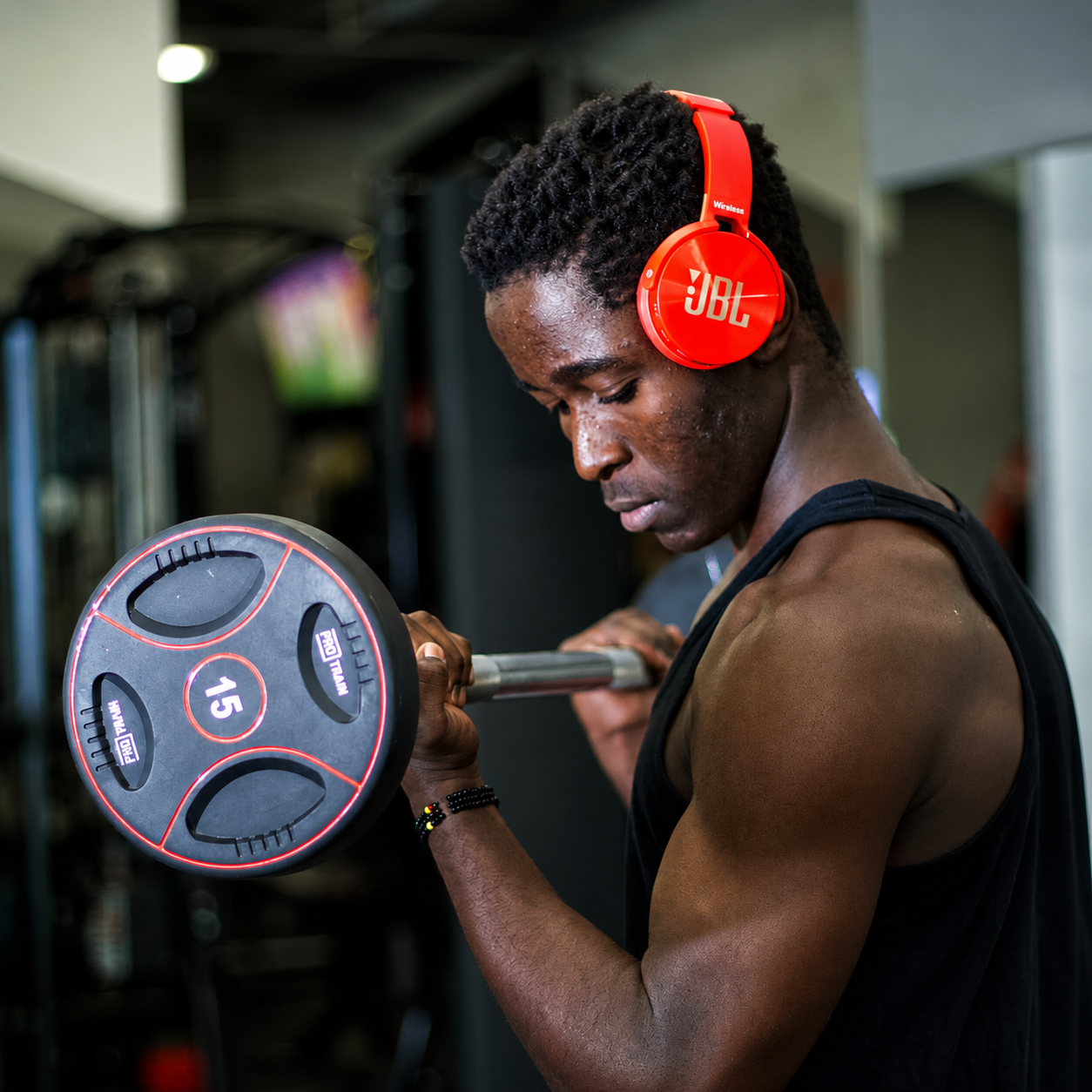
Their philosophies reinforced what I had begun to suspect: the voice responds to training. So I decided to take my voice to the gym.
I treated falsetto slides like stretching exercises. They gently extended the vocal folds and allowed me to work with the upper edges of the voice.
I treated my Transcending Tone exercise, a term I coined for the old Italian exercise known as Messa Di Voce, like a bench press. It developed strength, control, and coordination as I moved from soft falsetto into full voice.
Then I treated full voice sirens like squats. They built power, endurance, and flexibility throughout my entire range.
Using this approach, my range expanded lower and higher than I ever thought possible.
Over the years I’ve been labeled a bass, a baritone, a tenor, and even a Wagnerian tenor. Honestly, I don’t pay much attention to those classifications. If you’re singing opera or performing in a choir, vocal classifications can be useful. But if you’re an artist who simply loves to sing, don’t let a label convince you that your range has reached its limit.
The real secret to increasing range is surprisingly simple. Practice these three exercises in order:
- Falsetto Slides
- Transcending Tone
- Full Voice Sirens
Together, they form the foundation of my ISO Method. Many people know ISO as my Isolation Method, but over time I’ve come to appreciate that these exercises do much more than isolate specific functions. They are highly isometric in nature, and as my good friend Claude La Roche once pointed out, exercises like the Transcending Tone are also isomorphic because the sound literally morphs from falsetto into full voice.
Just keep in mind that the sequence matters. Falsetto Slides allow you to begin gently with light adduction. Transcending Tones bridge the gap between light and firm vocal fold closure. Sirens then strengthen full voice coordination across the entire range.
Years ago, while researching and writing my first book, I became a complete training fanatic. I would perform two 90-minute sessions every day, spending thirty minutes on each exercise.
Now, I am not suggesting you become that obsessive. I was essentially using myself as a laboratory experiment. What I am saying is that consistency matters. If you have access to a piano, keyboard, Pitch Wheel, or any pitch reference, you can practice these exercises on your own.
For most singers, I recommend one session earlier in the day and another later in the day. That dual-workout approach produced some of the fastest results I ever experienced.
If you’d like to learn more about these exercises, I explain them in detail in my book Rebalance Your Voice. We include that book free when you purchase a VOX through DoctorVox.shop as a way of saying thank you for being part of our community.
For the record, you can make these exercises even more effective by practicing them through your VOX and Mask.
The added resistance helps balance airflow, encourages proper pressure management, and reduces the tendency to over-tense the throat. In other words, it helps you train smarter while placing less stress on your voice.
Give it a month. Commit to the exercises. Practice consistently. Then report back and tell me what happened. I’ve watched this process work for thousands of singers over the past three decades. Songs that once felt impossible suddenly become manageable. Notes that used to appear out of nowhere become predictable and easy to reach.
The confidence that comes from that experience is incredible. So the next time someone tells you that your vocal range is fixed and that you were simply born with whatever notes you have, remember this:
Your voice is a muscle. And muscles respond to training. Take your voice to the gym!
Your VOX Coach,
Jaime Vendera


Leave a comment
This site is protected by hCaptcha and the hCaptcha Privacy Policy and Terms of Service apply.